Le Mirebalais, a thousand years of history on a tuffeau hill
A blog to travel back in time, from the motte of Foulques Nerra to the castles of Coussay and Cherves, in the heart of the Haut-Poitou plain.
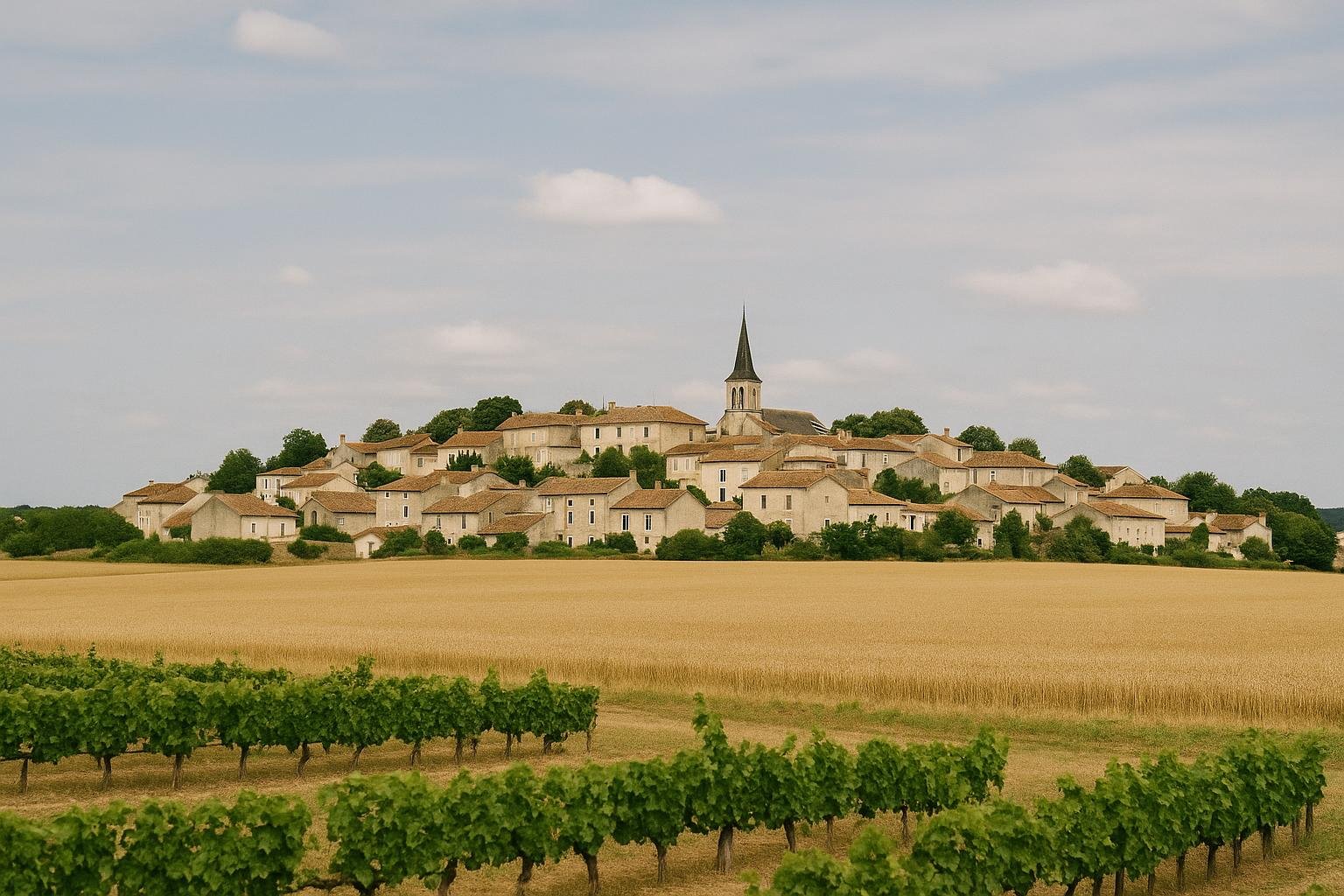
Memory of the territory
Why take an interest in the Mirebalais?
Twelve municipalities around Mirebeau, united from 2001 to 2016 in a community of communes, in the northwest of Vienne: a limestone plain dotted with castles and vineyards.
History
A stronghold of Anjou
Built by Foulques Nerra around the year 1000, the castle made Mirebeau a stronghold of Anjou until 1790, at the gates of Poitou.
Plain
A land of groies
On clay-limestone soils called groies, wheat, barley, rapeseed, and sunflower dominate; the AOC Haut-Poitou vineyards hold some islands.
Subsoil
A hill riddled with caves
Beneath Mirebeau, the tuffeau is pierced with galleries known here as caves; the town drew its water from the fountains located at the foot of the hill.
Rivers
The Dive and the Envigne
Two rivers originate here: the Dive, at Cherves, flows towards the Thouet; the Envigne, at Chouppes, joins the Vienne.
Twelve municipalities
Five stops in the Mirebalais
A feudal motte, a dolmen, castles with moats, a windmill, and beautiful dovecotes: each municipality keeps its trace.
Mirebeau, the town on the hill
A motte, ramparts, and a priory
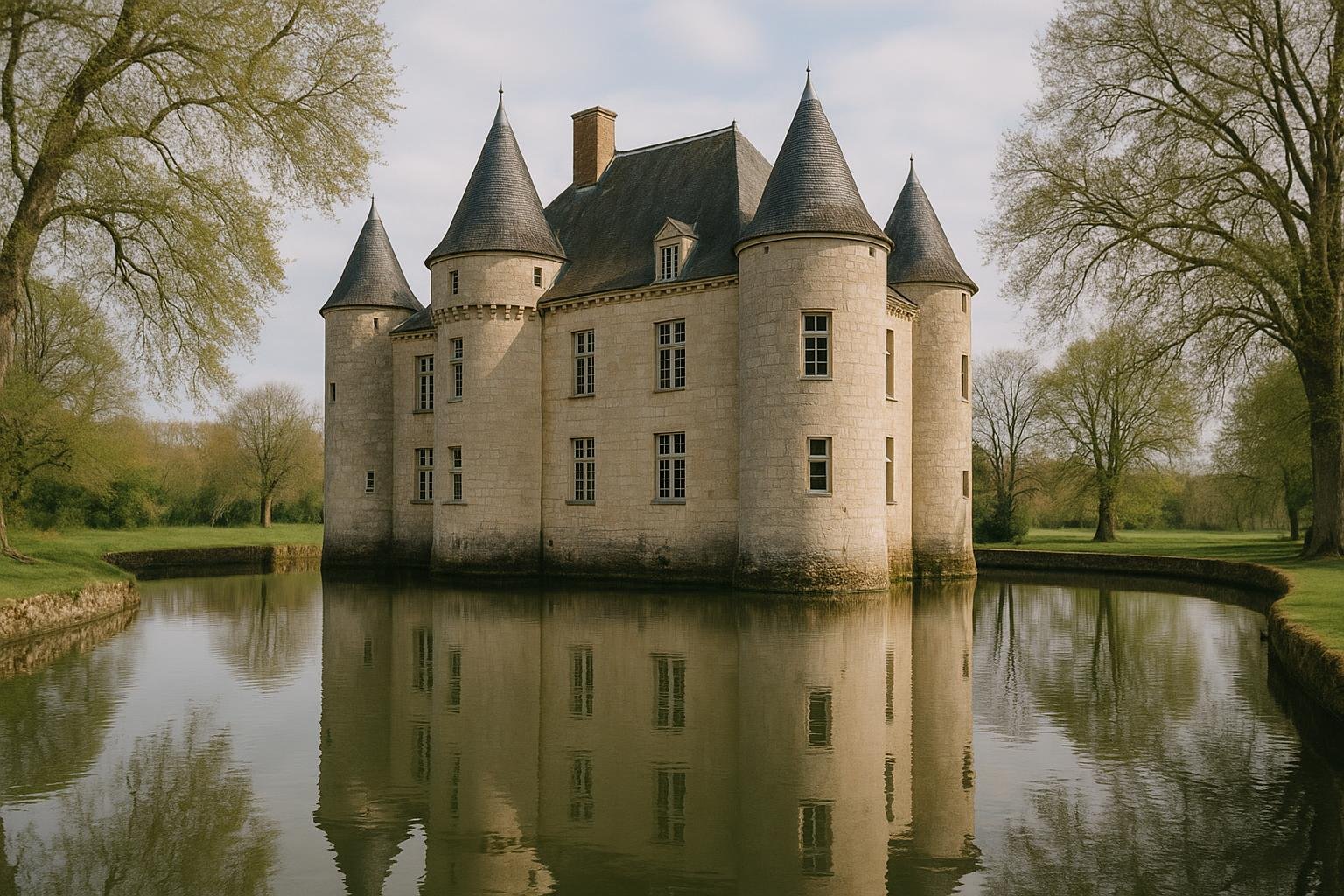
Built on a tuffeau hill that rises to 152 m, Mirebeau retains the motte of the castle of Foulques Nerra, still surrounded by moats, and remnants of ramparts listed in 1941. In 1202, Eleanor of Aquitaine was besieged there, before being rescued on August 1 by John Lackland.
The detail that matters“Walk around the motte: its moats, partly filled in, are still clearly visible in the landscape.”
- The Saint-André priory and its 13th-century chapter house
- The convent of the Poor Clares, founded in 1411, National Street
- The museum of Haut-Poitou and its animated model of 100 m²
Coussay & Chouppes
The castle of the young Richelieu and a Romanesque apse
In Coussay, the former priory residence from the early 16th century, surrounded by moats, hosted Richelieu, the local prior, especially during his disgrace in 1617. In Chouppes, the Saint-Saturnin church, listed in 1925, retains an apse from the 12th century.
The detail that matters“In Chouppes, look for the capital of the weighing of souls: Saint Michael stands up to the devils.”
- The castle of La Tour-de-Ry, by the Envigne river
- The double-spiral staircase of Coussay
- The ruins of the castle of Marçay
Cherves, Maisonneuve & Massognes
A keep, a mill, and the source of the Dive
The castle of Cherves features a keep flanked by four corner towers, classified in 1987. Nearby, the Tol mill bears the date of 1796, engraved several times; the Dive also springs in Cherves, flowing towards Massognes.
The detail that matters“The Tol mill suffered from a storm at the end of 2024: check with the People of Cherves before visiting.”
- The cultural farm of the People of Cherves and its rooms
- The “Dive and the Mills” circuit, 11 km
- The valley of the Dive, between Massognes and Cuhon
Champigny, Amberre, Vouzailles
A dolmen, fossil shells, and a dovecote
In Champigny-le-Sec, the dolmen of Fontenaille, classified in 1929, rests its sandstone table on three pillars. In Amberre, the falunières of Moulin Pochas hold the shells of a sea that is about 15 million years old. Vouzailles has its pigeon loft from 1674.
The detail that matters“Under the dolmen of Fontenaille, excavations revealed human bones and fragments of pottery.”
- The plain of Vouzailles, listed for its bustards
- An 8.6 km loop around the faluns of Amberre
- The pigeon loft of the presbytery of Amberre
Thurageau, Cuhon & Varennes
A tower, a pigeon loft-porch, vineyards
In Thurageau, the tower of Abain, listed in 1925, is the last vestige of the castle of Chasteigner. In Cuhon, the pigeon loft-porch of La Bournalière has been listed since 2004; Varennes became a delegated municipality of Saint-Martin-la-Pallu in 2019.
The detail that matters“Thurageau was long a wine-producing area: in 2010, the municipality still had 69 hectares of vineyards, compared to 45 in Mirebeau.”
- The Saint-Pierre church of Thurageau
- The fountain of La Bourrelière in Cuhon
- The remarkable holm oak of Varennes
Through the centuries
Four dates that shaped Mirebalais
From Foulques Nerra to Richelieu, the small hill has seen the great names of history, and its market square is still alive.
Around the year one thousand
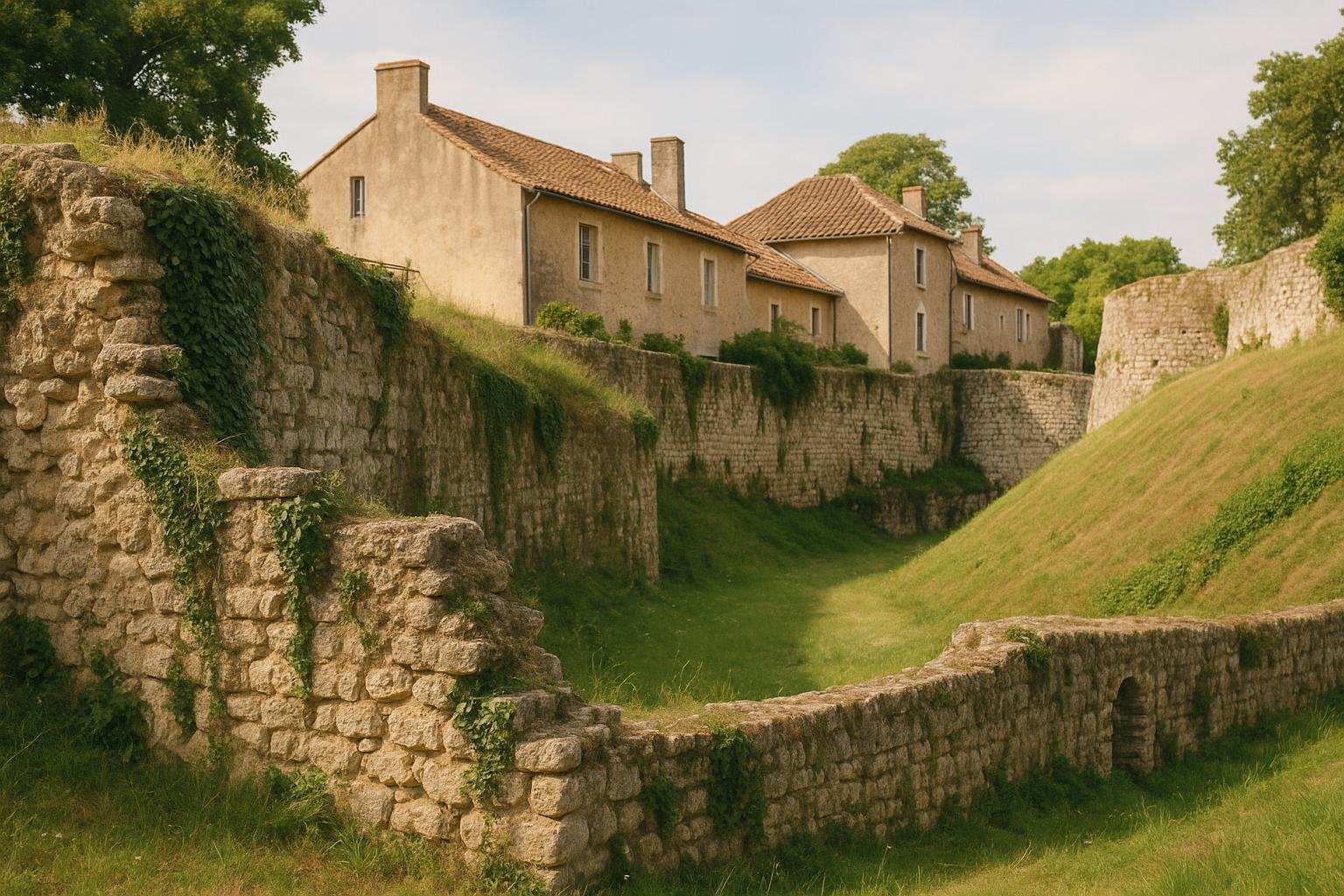
Foulques Nerra plants his motte
Between 987 and 1006, Foulques Nerra, Count of Anjou, builds a motte castle at the top of the hill. After his victory at Moncontour in 1033, Mirebeau remains Angevine until 1790, even as it looks towards Poitou. In the 14th century, its barony counts 114 fiefs under the seneschalcy of Angers.
To see: the motte and its ditches, in Mirebeau
To go further“The circuit of the fortified town is 3 km starting from the place du Mail: expect a little over an hour.”
1202
Eleanor of Aquitaine besieged
In 1190, Richard the Lionheart gave the castle and the town to his mother, Eleanor of Aquitaine. In the summer of 1202, the queen was besieged there by her grandson, Arthur of Brittany. John Lackland rushed to her aid and rescued her on August 1, capturing Arthur and Hugh of Lusignan.
At the castle of Mirebeau, in the summer of 1202
To go further“In September 2026, the Friends of the Priory of Saint-André held a conference on Eleanor and the castle.”
The 17th century
Richelieu, Prior of Coussay
As Prior of Coussay, the young Richelieu stayed in this moated residence at the beginning of the 17th century, notably during his disgrace in 1617; Marie de Medici visited in the spring of 1621. On February 7, 1628, he purchased the barony of Mirebeau and had the castle dismantled.
Castle of Coussay, residence from the 16th century
To go further“Above the double staircase, the pediment bears Richelieu’s episcopal hat: a detail not to be missed.”
Today
The Republic Market
On Wednesday and Saturday mornings, from 8 AM to 1 PM, about fifty vendors set up in the Place de la République. Legend has it that in 1569 the braying of donkeys saved the town from a Protestant attack: the Poitou donkey has remained the emblem of Mirebeau.
Wednesday and Saturday mornings, in Mirebeau
To go further“The saying derived from this legend still circulates in the streets of Mirebeau: more pass by than remain.”
In terms of nature
Six discreet inhabitants of the plain
Field birds and cave bats: the Mirebalais plain is home to rare wildlife.
Rare bird
The Great Bustard
A large bird with a black and white neck; the plain of Vouzailles had 47 pairs in 2000.
Twilight
The Eurasian Stone-Curlew
A field bird with large yellow eyes, active at dusk, nesting on the ground.
Singer
The Ortolan Bunting
A small passerine bird of the crops, mentioned in the naturalist inventory of the Mirebeau plain.
Bird of prey
The Harriers
Birds of prey that hunt low, close to the wheat, and often nest in the cereals of the plain.
Underground
The Greater Horseshoe Bat
Bat: about 200 hibernate in the underground quarry of La Boule d’Or, in Mirebeau.
Discreet
The Barbastelle
Another bat from La Boule d’Or, recognizable by its short snout; the site is classified as ZNIEFF.
Since 2003, the Natura 2000 area of the Mirebalais and Neuvillois plains covers 37,430 hectares across 30 municipalities.
The Chronicles
The latest chronicles from the blog
-
How to Easily Distinguish Between Appui and Appuie in French
The confusion between “appui” and “appuie” is based on a precise morphological mechanism: these two forms share the same root, but one is a masculine noun, while the other is a conjugated form of the verb appuyer. Their near-homophony in speech makes the distinction inaudible in most contexts, which explains the frequency…
-
Everything You Need to Know to Choose the Right Professional Equipment: Tips and Tricks
The professional equipment market covers a wide spectrum, from construction tools to computer stations, including personal protective equipment. Offers are multiplying, ranges are segmenting, and regulatory obligations are evolving. Choosing professional equipment requires going beyond simple price comparison to include less visible criteria…
-
Killahejlaszo Housing Ltd: a reliable or risky real estate investment opportunity?
You come across a real estate investment advertisement by Killahejlaszo Housing Ltd. The displayed returns seem attractive, and the pitch talks about sustainable housing and innovative projects. Before pulling out your checkbook, a simple reflex can save you from major troubles: check that the company actually exists in an official register. Registration of Killahejlaszo…
-
Should you choose a local developer or a foreign company for your real estate purchase?
The financial guarantee of completion linked to a property located in France is mandatory for the seller, regardless of the nationality of its parent company. Whether a local developer or a foreign company, the legal framework of the VEFA remains unchanged as long as the project is situated on French territory. The entire question therefore revolves around this…
-
How World Days Are Gaining Popularity and Becoming Essential in 2026
When a local authority, an association, or a brand seeks to set up a communication operation, the first reflex in 2026 is to consult the calendar of world days. These dates, once reserved for major humanitarian causes, now structure the action plans of sectors as varied as tourism, design, or fashion. Their…
-
Discover the latest news and essential tips for parents in daily life
The legal framework of parenthood in France underwent several notable changes in 2026, affecting both labor law and digital regulation, as well as school-family relations. We provide an overview of recent measures that concretely alter the lives of parents, with a focus on the nuances that the summaries…





Your memory
A memory from Mirebalais to share?
A family story, an old photo, a detail of stone spotted along the way, or just a hello? Write to us.
Friendly exchange among curious minds of Mirebalais.