Tips and Practical Advice for Enjoying Retirement and Staying Active
Retirement does not primarily pose a problem of time occupation. It poses an identity problem. The transition from being an active professional to a retiree changes the structure of the day, social interactions, and self-perception. Living well in retirement requires addressing these three dimensions simultaneously, not just ticking off a list of activities.
Identity Transition in Retirement: Rebuilding a Routine Without a Professional Framework
The end of professional activity removes a central organizer: schedules, colleagues, weekly goals. We observe that retirees who navigate this phase best are those who rebuild a daily structure within the first three months. Waiting for the rhythm to establish itself spontaneously produces the opposite effect, a gradual erosion of motivation.
In practical terms, it is not about replicating a work schedule. It is about setting two or three non-negotiable weekly appointments: a class, a community engagement, a regular physical outing. These anchor points create a framework around which the rest of the week can naturally organize.
A common trap is to multiply sign-ups in the first week of retirement, only to abandon everything after a month due to overload. We recommend testing just one new activity per month during the first quarter, evaluating its effect on daily life, and then deciding if it deserves a lasting place. The platform maxisenior.fr lists useful resources to identify activities suitable for this pivotal period.
The real risk is not boredom but the loss of social reference points. Professional interactions often represented the majority of daily exchanges. Replacing them requires a conscious effort.
Physical Activity After 60: Useful Thresholds and Dosage Errors
The generic recommendation to “move more” is not enough. The body of a recent retiree does not have the same needs as that of an 80-year-old, and joint or cardiovascular constraints vary significantly from one individual to another.
Choosing the Right Type of Effort According to Physical Condition
Walking remains the foundation. It engages the cardiovascular system without notable joint impact, and it can be done without equipment or registration. However, it does not work on balance or muscle strength, two components that decline rapidly after ceasing activity.
- Light muscle strengthening (elastic bands, bodyweight exercises) prevents sarcopenia and protects the joints, with two short sessions per week
- Balance activities (tai chi, gentle yoga, exercises on unstable surfaces) reduce the risk of falls, the leading cause of loss of autonomy among seniors
- Swimming or aquagym is suitable for those suffering from joint pain, as the buoyancy of water reduces the load on the knees and hips
Combining endurance, strengthening, and balance constitutes the triad to aim for. Three different activities are better than one practiced intensively.
Classic Mistake: Too Abrupt a Resumption
Resuming sports after years of professional sedentariness exposes one to tendon or muscle injuries. Starting with twenty-minute sessions at moderate intensity, then gradually increasing the duration over several weeks, reduces this risk. A prior medical assessment helps identify specific contraindications.
Preventing Social Isolation in Retirement: A Health Issue, Not a Comfort Issue
Social isolation increases the risks of cognitive decline and depression in a documented manner. It is not a minor inconvenience of retirement life; it is a significant health factor.
People who lived alone before retirement are not the only ones affected. Those whose social life relied mainly on their professional circle sometimes discover a sudden void after leaving work.
Building a Sustainable Local Network
Local clubs and associations remain the most reliable lever. Their advantage lies in regularity: a fixed weekly appointment creates stronger bonds than a one-off activity. Volunteering offers a double benefit, maintaining a sense of social utility and generating regular contacts.
Family plays a different role. Relationships with children and grandchildren provide emotional grounding, but they do not replace peer interactions. Diversifying relational circles (neighborhood, sports activities, civic engagements) better protects against isolation than dependency on a single group.
Memory and Cognitive Stimulation: What Works in Daily Life
Online memory games have a good reputation, but their effect on cognitive decline remains limited if practiced in isolation. Effective cognitive stimulation combines novelty, social interaction, and real learning effort.
Learning a foreign language, taking a structured course (history, science, computer science), or practicing a musical instrument engages more brain functions than repetitive screen exercises. Gradual difficulty and contact with a teacher or a group of learners amplify the benefits.
- Regular reading maintains verbal memory and active vocabulary
- Group board games (bridge, chess, scrabble) combine strategy and interaction
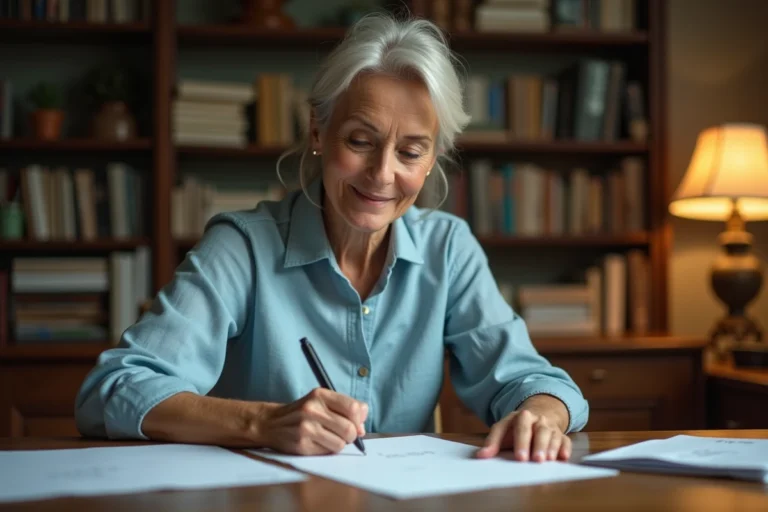
- Writing (journal, correspondence, life story) engages episodic memory and thought structuring
The common point of these activities: they require sustained effort and produce a noticeable result. Cognitive passivity is the main enemy of memory after 60.
Living well in retirement is not just about filling an agenda. The quality of the transition, the dosage of physical activity, the strength of the social network, and cognitive stimulation form a system. Neglecting one of these pillars weakens the others, regardless of the number of activities practiced elsewhere.