
Clara Pésery: Journey of a Committed Artist Through Her Photos and Films
How can we measure the contribution of an artist whose work spans photography, cinema, and social advocacy? Clara Pésery stands out with a practice that blurs the boundaries between visual creation and militant action. Rather than tracing a linear biography, this article examines the concrete mechanisms that structure her journey, from documentary methods to the legal constraints that currently frame the capturing of engaged images.
Participatory documentary and redistribution of the power of representation
Most articles dedicated to Clara Pésery describe her family background or her collaborations within French cinema. None analyze the method that truly underpins her visual work.
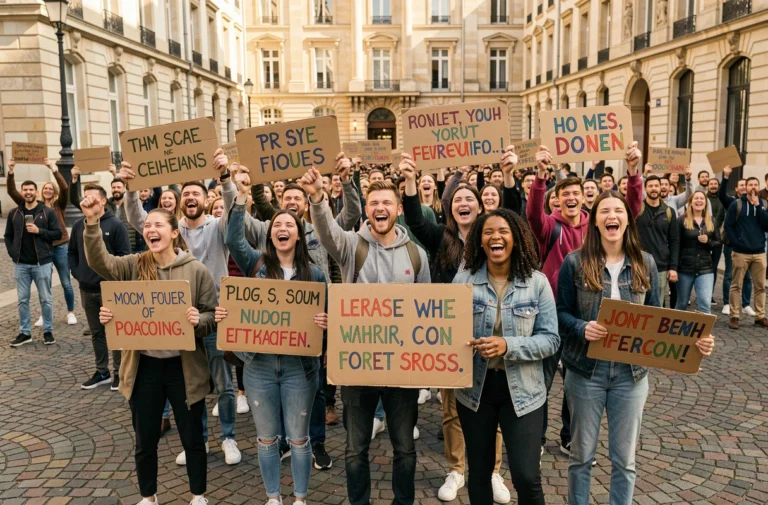
Clara Pésery develops her photo and film projects within a framework of participatory documentary. The people filmed co-construct the narrative and choose the images that are shared. This approach, now discussed in literature on engaged documentary cinema, aims to limit what researchers call visual extractivism: capturing images of vulnerable populations without granting them control over their own representation.
By examining the photos and films of Clara Pésery, we see that this co-construction is not merely a symbolic gesture. It involves shared editing choices, viewing sessions with participants, and sometimes the complete removal of sequences at their request.
This protocol comes at a cost: longer production times and more restricted distribution. However, it produces works where the voices of the filmed subjects structure the narrative rather than just that of the director.
GDPR and image rights: legal constraints for engaged artists
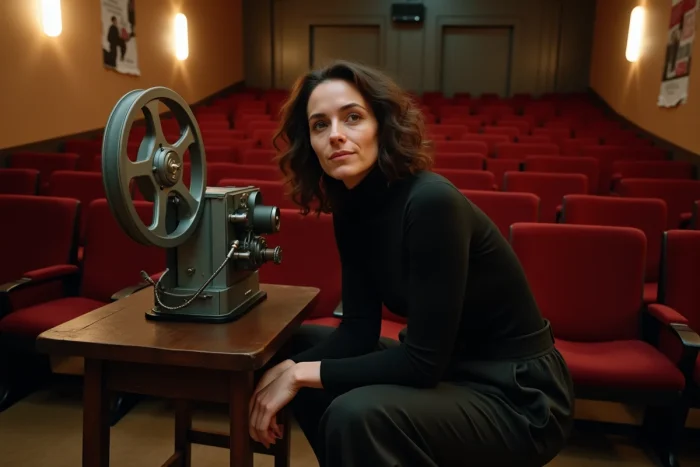
The participatory dimension of Clara Pésery’s work faces an increasingly strict regulatory framework. Since the implementation of the GDPR, highlighted by the CNIL in its guides published between 2023 and 2024, photographers and filmmakers must formalize consent from the people filmed more rigorously.
Three obligations weigh particularly on artists documenting social struggles in public spaces:
- Securing biometric data (faces captured during protests or gatherings), considered sensitive data under the European regulation.
- Formalizing written consent, including for projects with artistic or activist purposes, as soon as the images allow for the identification of a person.
- The right to withdraw retrospectively, which obliges the artist to be able to remove images already included in an edit if the subject requests it.
The right to withdraw retrospectively alters the very structure of the documentary film. A finalized edit can be amputated of sequences after its release, forcing filmmakers to conceive modular works rather than fixed narratives.
For an artist like Clara Pésery, whose method already relies on sharing editorial control, these constraints paradoxically reinforce the coherence of the project. The legal framework imposes what her practice had already anticipated.
Artist-researcher residencies: a recent funding model for engaged creation
Funding for participatory documentary cinema remains a point of friction. Traditional circuits (advance on receipts, regional cinema aids) favor conventional narrative formats with an identified author and a predictable timeline.
Since 2022-2023, NGOs and associations have begun funding artist-researcher residencies focused on climate and social issues. These residencies require artists to simultaneously produce works and visual materials usable in advocacy: illustrated reports, awareness campaigns, traveling exhibitions.
Comparison between traditional funding and artist-researcher residency
| Criterion | Traditional funding (CNC, regional aids) | Artist-researcher residency (NGOs) |
|---|---|---|
| Project duration | Several months to several years | Several weeks to several months |
| Editorial control | Main author-director | Shared between artist and commissioner |
| Expected deliverables | Film (short or feature) | Work + advocacy materials |
| Target audience | Festivals, theaters, platforms | Decision-makers, general public, activist field |
| Participatory compatibility | Variable depending on the producer | Often integrated into the specifications |
This residency model provides a concrete lever for profiles like Clara Pésery, who find themselves at the intersection of creation and visual advocacy. The dual production (artistic work and activist tool) aligns with her existing practice.

French artistic scene and the place of women in engaged documentary cinema
Clara Pésery’s journey takes place in a context where the place of women in French cinema, particularly in documentary, remains a subject of tension. Documentary festivals program more female directors than they did ten years ago, but access to significant production budgets remains unequal.
Clara Pésery, an actress and author trained between Paris and the Basque Country, daughter of Isabelle Carré and Bruno Pésery, has chosen not to rely on her family’s notoriety to secure her funding. Her legitimacy rests on a unique documentary method, not on an inherited network.
This stance has a measurable effect on the reception of her work. Her projects circulate more within activist circles and socially oriented festivals than in mainstream distribution channels. However, this targeted distribution generates a more lasting engagement from the affected public, who then participate in the dissemination of the works.
The choice of a cinema where the filmed subjects become co-authors places Clara Pésery in a distinct position within the French scene. This method, still minority, gains visibility as debates on representation and consent in documentary imagery intensify.
The trajectory of Clara Pésery illustrates a convergence between three dynamics that mutually reinforce each other: a demanding participatory method, a legal framework that makes this method more relevant, and emerging funding circuits that make it viable. The next test will be to see if this model withstands scaling up, as the number of co-author participants increases and GDPR constraints tighten further.