Discover the botanical universe and natural treasures of L’Herbe sous le Pied
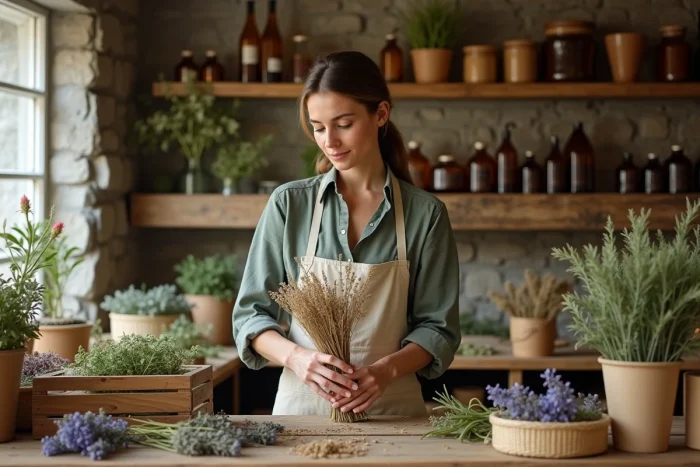
Have you ever crushed a leaf of thyme between your fingers in the mountains and felt that scent more intense than that of supermarket thyme? This difference is due to altitude, soil, and wind. It is precisely this connection between plant and terroir that L’Herbe sous le Pied explores from its alpine plots, cultivating and harvesting aromatic and wild plants suited to their natural environment.
Local ecotypes of aromatic plants: a selection dictated by the alpine climate
In the plains, a thyme or oregano plant grows quickly and produces abundantly. In the mountains, the constraints change radically. Late spring frosts, brief but brutal summer droughts, and often poor soils impose a different rhythm on the plants.
L’Herbe sous le Pied conducts a selection work on local ecotypes of mountain plants, mainly thyme, oregano, and savory. Rather than importing commercial varieties, the approach is to identify, multiply, and cultivate plant populations already acclimated to alpine conditions. These ecotypes are better able to withstand climatic fluctuations and develop more concentrated aromatic profiles.
This patient work has been presented at regional events related to mountain agriculture. It remains poorly documented online, making it a rarely addressed angle by generalist sites dedicated to aromatic plants. To learn more about L’Herbe sous le Pied, the organization’s website details its cultivated species and practices.
Ethical foraging in the wild: the rules that L’Herbe sous le Pied imposes
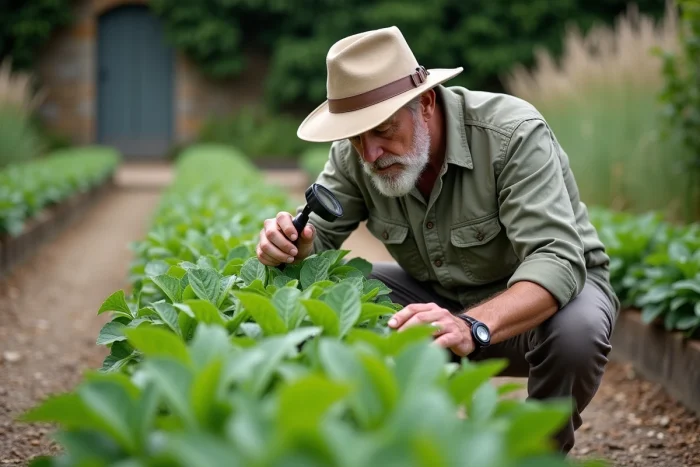
Foraging for wild plants is attracting more and more nature enthusiasts. However, careless harvesting directly threatens local biodiversity. L’Herbe sous le Pied applies a concrete protocol to limit the impact of its collections.
Have you ever noticed that a heavily trafficked mountain trail eventually loses its flowers at the edges? Foot traffic and repeated foraging deplete botanical sites. To prevent this, the company adheres to strict rules:
- Limitation of collections per site: never more than a small fraction of the population present at a given site, to allow the plants to reproduce naturally.
- Rotation of foraging areas from one season to the next, to allow for the regeneration of soils and plant communities.
- Precise identification of protected species and fragile habitats (dry meadows, alpine lawns, wasteland areas) before any harvest.
This approach falls within what professional foragers call ethical foraging. It goes beyond simple common sense: it is a measurable commitment, season after season, on identified plots.
Experiential botanical tourism: walks, tastings, and alpine biotopes
Botanical tourism in the mountains has changed in nature in recent years. Visitors no longer come just to observe flowers. They want to understand a biotope, touch the plants, smell them, and then taste them in the form of infusions, syrups, or pestos prepared on-site.
L’Herbe sous le Pied offers tours and workshops that follow exactly this pattern. A walk begins with the discovery of the natural environment: identifying dry meadows, wasteland areas, and alpine lawns. Each environment hosts different species, and the organization explains why a particular plant grows here and not there.
Tasting on-site transforms a walk into a complete sensory experience. The link between the soil, climate, and cup of infusion becomes tangible. This format recalls the foraging walks popularized by organizations like Le Chemin de la Nature, but transposed to the specific context of the alpine mountains.
What biotopes to discover during a visit?
Three types of natural environments generally intersect on the proposed routes. Dry meadows, exposed to sun and wind, shelter thyme and savory. Cooler alpine lawns host species adapted to the cold. Wasteland areas, often overlooked, conceal surprising biodiversity with pioneering plants that are sometimes mistakenly considered weeds.
This mosaic of environments, concentrated in a small area, gives botanical walks a rare educational density.
Regulation of aromatic plants: what the European framework has changed
Since the entry into force of the regulation (EU) 2019/1009 on fertilizing products and the strengthening of DGCCRF controls on health claims of herbal teas, producers of aromatic plants have had to adapt their commercial discourse.
Direct therapeutic promises (“this herbal tea alleviates this symptom”) are no longer tolerated without scientifically validated evidence at the European level. L’Herbe sous le Pied has chosen to refocus its communication on taste, terroir, and traditional uses rather than on medical benefits.
This repositioning is not trivial. It requires finding other selling points: the organoleptic quality of a mountain infusion, the story of a local ecotype, the notion of companion plants in a garden. For the consumer, it is a guarantee of transparency. For the producer, it is a fundamental work on the perceived value of their product.
Companion plants and culinary uses
The notion of companion plants, borrowed from gardening, takes on a particular meaning at L’Herbe sous le Pied. Some aromatic plants grown together protect each other from pests or improve soil quality. Oregano, for example, attracts beneficial pollinators to neighboring crops.
In the kitchen, processed products (syrups, pestos, infusion blends) highlight species that are not found in large distribution. Each product reflects a specific alpine terroir, distinguishing it from standardized ranges available in grocery stores.
The botanical universe of L’Herbe sous le Pied ultimately adheres to a simple principle: starting from the natural environment, respecting its constraints, and deriving plants whose aromatic quality speaks for itself. The rest, the walk, the tasting, the bottle of syrup brought home, follows naturally.