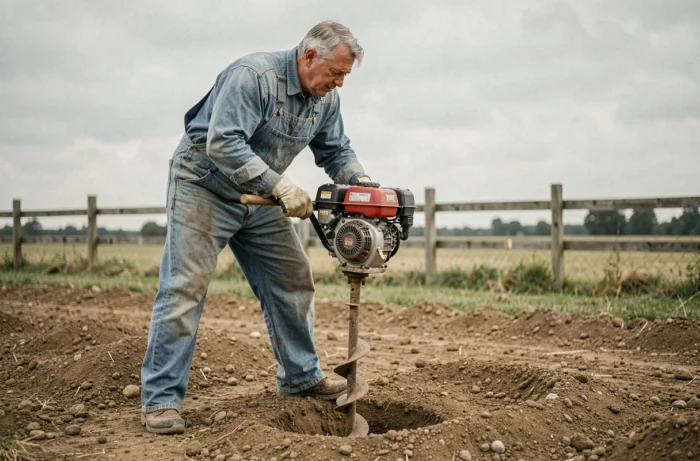
Between a two-stroke engine auger and a four-stroke model, between a modest displacement and a heavier engine, the performance gaps in the field are sometimes difficult to anticipate. Choosing your thermal auger involves considering several technical variables (power, weight, type of bit, fuel tolerance) to arrive at a tool suited to the targeted soil and the actual frequency of use.
Tolerance to ethanol and engine reliability: a neglected criterion
Most selection guides focus on power and bit diameter. However, a parameter that is rarely addressed concerns the longevity of the engine: the recommended type of gasoline and ethanol tolerance.
Recent small garden engines generally accept gasoline containing up to 10% ethanol (SP95-E10). For frequent use, the fuel is consumed before it degrades. In contrast, for occasional use (fence installation once a year, seasonal plantings), E10 stored for several weeks in the tank produces deposits in the carburetor and accelerates internal corrosion.
Before purchasing, check the recommended fuel mention in the technical sheet. Some manufacturers explicitly recommend SP95-E5 or alkylate gasoline for intermittent use. This detail directly affects the ease of starting after several months of storage.
One point to remember: E85 (superethanol) should be completely avoided on a thermal auger. Its very high ethanol content causes damage to the components of the fuel system (seals, membranes, hoses) not designed for this fuel. To gather reviews on the thermal auger that correspond to actual use, it is also important to look at feedback on engine reliability after several seasons, not just the advertised raw power.
Two-stroke or four-stroke engine: comparison table
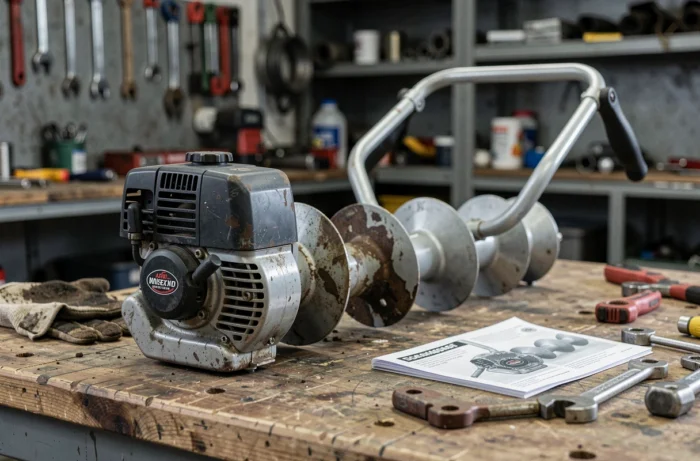
The choice between a two-stroke engine and a four-stroke engine structures most of the available ranges. The differences are not limited to power: they also affect maintenance, weight, and noise.
| Criterion | 2-Stroke Engine | 4-Stroke Engine |
|---|---|---|
| Fuel | Gasoline/oil mixture | Gasoline only (separate oil sump) |
| Engine weight | Lighter | Heavier |
| Maintenance | Preparation of the mixture with each fill-up | Periodic oil change |
| Noise | High | Moderate |
| Low-end torque | Medium | Superior |
| Estimated lifespan | Good if the mixture is respected | Generally longer |
The two-stroke engine dominates the consumer thermal auger market. Its power-to-weight ratio is well-suited for occasional drilling of holes for fence posts or shrub planting. In contrast, a four-stroke engine has a clear advantage for longer jobs: its superior low-end torque reduces user fatigue in compact soils.
Engine power and bit diameter: how to correlate them
The power of a thermal auger, expressed in horsepower (HP), must be directly related to the diameter of the bit used and the nature of the soil. Increasing the bit diameter without adjusting the power generates insufficient torque: the machine stalls, overheats, or forces the user to apply manual effort.
- For small diameter holes in loose soil (planting, small stakes), a modest engine is sufficient with a narrow bit.
- For medium diameter holes intended for fence posts in normal soil, intermediate power offers a good compromise between maneuverability and efficiency.
- For wide drilling or in hard and stony soil, a more powerful engine is necessary, often associated with use by two operators.
The bit diameter suited to the soil is as important as the raw power of the engine. A powerful model with an inappropriate bit for the terrain will be less effective than a modest model properly equipped.
Bits and clay soils: a special case
In wet clay soil, the earth sticks to the bit and slows extraction. Bits with a wide pitch (large spacing between the coils) limit this phenomenon. Ensure that the chosen model accepts interchangeable bits: the versatility of the tool depends on it.
Weight and ergonomics of a thermal auger: impact on project duration
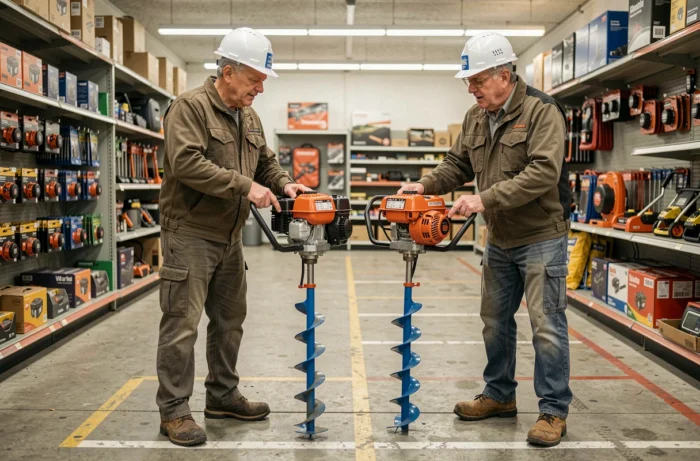
A thermal auger weighs between about ten kilos for lightweight models and significantly more for four-stroke or large displacement versions. On a job involving several dozen holes, this weight difference transforms the workday.
Models designed for a single operator generally feature a U-shaped handle and anti-vibration grips. Anti-vibration grips reduce muscle fatigue during prolonged use. Augers intended for two operators incorporate a wider handle with four grips, which distributes effort and stabilizes the machine in resistant soils.
Some models exist in a “wheelbarrow” version (on wheels), which eliminates the need for carrying. This configuration is suitable for professionals who perform drilling over large areas but increases bulk during transport.
Storage and maintenance between seasons
The long-term reliability of a thermal auger largely depends on what happens between jobs. Draining the remaining fuel before prolonged storage limits the formation of deposits in the carburetor. For a two-stroke engine, never let a gasoline/oil mixture age in the tank: the oil separates from the gasoline and clogs the system.
Cleaning the bit after each use (dirt, roots, stones stuck in the coils) preserves the sharpness and rotational balance. Storing the auger in a dry place, with the engine protected from moisture, extends the lifespan of electrical components (spark plug, ignition coil).
The choice of a thermal auger relies less on a single criterion than on the coherence between the engine, the bit diameter, the type of soil, and the frequency of use. A model perfectly suited for occasional use in loose soil will be unsuitable for intensive work in stony terrain. Checking fuel compatibility and planning for storage maintenance remains the most often overlooked point, yet it is crucial for the longevity of the tool.