Tips and Tricks for Aging Well: Resources and Practical Information for Seniors
France has a growing proportion of people over 60, and public policies for aging prevention have been structured in recent years around coordinated systems. Between financial assistance for home care, collective prevention workshops, and housing adaptations, the landscape of resources available for seniors has become denser.
Sorting through these systems, understanding their access conditions, and identifying those that meet a real need requires a reading effort that this article aims to simplify.
MaPrimeAdapt’ and housing adaptation: what the program really covers
Since 2024, MaPrimeAdapt’ structures all work assistance for adapting the housing of seniors. The program, managed by Anah and the France Rénov’ network, finances a significant part of the modifications aimed at preventing loss of autonomy: walk-in showers, stairlifts, grab bars, and widening of doors.
The preparation of the file includes the intervention of an occupational therapist, who assesses the actual needs of the housing before any validation. This involvement of a health professional distinguishes MaPrimeAdapt’ from previous aids, which were often granted based on simple declarations.
Additionally, several online resources centralize information on home care assistance. Notably, on the seniors page of (wo)menweb, there is an overview of useful programs and orientations for elderly people and their relatives.
The open question concerns the processing time of the files. Field feedback varies on this point: some beneficiaries report several months of waiting between the request and the start of work, while others receive a response in a shorter time depending on their department.
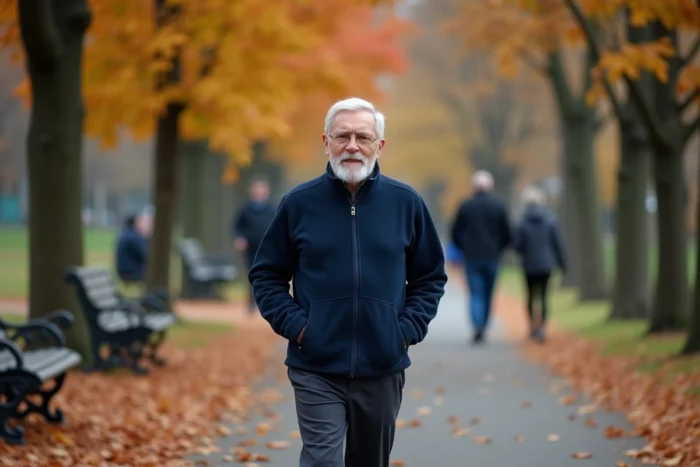
Collective prevention workshops: eight recurring themes, but variable results
Pension funds co-finance free collective workshops for those aged 60-80 across the country. These sessions, led by trained professionals, typically gather 10 to 15 participants around specific themes.
The eight most common themes deserve to be listed, as they appear in almost all proposed programs:
- Balance and fall prevention, with practical exercises supervised by a physiotherapist or sports educator
- Memory and cognitive stimulation, often in the form of group games and daily situational exercises
- Sleep, proper use of medication, and nutrition, addressed either separately or in combined modules
- Social connection, digital skills, and housing adaptation, which tackle isolation and tools for home care
Access to these workshops generally goes through CCAS, CLIC, or directly through the pension fund to which the senior belongs. The available data do not allow for conclusions about the measured effectiveness of these workshops in terms of reducing hospitalizations. However, regular participation seems to play a more decisive role than the number of themes covered.
Financial assistance for home care: a stack to untangle
Home care relies on a financial assistance ecosystem that is more structured than a few years ago, but whose clarity remains a problem for families. Several programs coexist, with different eligibility conditions and ceilings.
The Personalized Autonomy Allowance (APA) remains the foundation for people experiencing loss of autonomy. It finances the intervention of home helpers, day care, or supplies related to dependency. Its amount varies according to the degree of autonomy assessed by a departmental medico-social team.
In parallel, the 50% tax credit for hiring a home helper applies whether the senior is a direct employer or goes through a service provider. This tax mechanism alleviates the financial burden but requires upfront payment before reimbursement.
Pension funds also offer their own assistance, aimed at retirees who are not yet eligible for the APA. These aids sometimes cover cleaning services, meal delivery, or shopping assistance. The single point of orientation remains the CLIC or CCAS of the municipality, which directs to the program suited to each situation.

Adapted physical activity and senior health: what public programs say
Public recommendations regarding physical activity for seniors are not limited to walking. Prevention programs co-financed by pension funds include sessions of balance, muscle strengthening, and joint flexibility, supervised by professionals.
Fall prevention is a priority area. A fall in a person over 65 often leads to hospitalization and accelerates loss of autonomy. Dedicated workshops combine physical exercises and home adaptations, creating a direct link between physical activity and housing adaptation.
Physical activity also impacts social connections. Group sessions, whether held in a municipal hall or outdoors, help break isolation, identified by public health actors as an aggravating factor of aging. Conversely, an isolated senior who does not engage in any physical activity accumulates two risk factors for loss of autonomy.
Finding an activity near you
CCAS, multi-professional health houses, and local associations serve as the first points of contact. Some pension funds offer interactive maps to locate prevention workshops by postal code, simplifying the search for seniors or their caregivers.
Aging today mobilizes a network of public, associative, and private actors whose coordination is improving, although gaps persist in rural areas. The multiplicity of points of contact (CLIC, CCAS, pension funds, Anah) can discourage efforts. Identifying a single contact person in one’s municipality or department remains the first concrete step to accessing existing resources.