
World Tour of Favorite Dishes: Culinary Journey Through International Specialties
A national dish tells a story of geography, climate, and know-how passed down through generations. Each country encapsulates in its culinary specialties a blend of local ingredients, cooking techniques, and social codes related to the meal. This world tour of favorite dishes does not aim for exhaustiveness but targets specialties whose preparation logic sheds light on the culture that produced them.
Rendang, koshari, kare-kare: dishes that shake up culinary rankings
International rankings like “World’s Best Dishes,” particularly those published by TasteAtlas, have significantly evolved since 2023-2024. Dishes like Indonesian rendang, Egyptian koshari, or Filipino kare-kare now rank high, where Italian pasta and Japanese sushi once monopolized attention.
This shift is not coincidental. Rendang, for example, relies on slow-cooking meat in coconut milk and a complex blend of spices (galangal, lemongrass, turmeric, chili). The sauce reduces to coat each piece in a caramelized layer. This prolonged dry cooking technique historically served to preserve meat in a tropical climate, long before refrigeration.
The Egyptian koshari, on the other hand, layers rice, lentils, chickpeas, and macaroni under a spicy tomato sauce and fried onions. It is a completely vegetarian dish, rich in plant-based proteins, and constitutes the most widespread street food in Cairo. Discovering world specialties on Monde Gourmandises allows one to appreciate how these dishes, long ignored by Western guides, now hold a legitimate place in global gastronomy.

Cooking, fermentation, spices: techniques that define a country’s flavors
Reducing a dish to its list of ingredients overlooks what makes it unique. The preparation technique is often the true cultural marker.
Fermentation in East Asia
Korean kimchi, Japanese miso, and Vietnamese nuoc-mâm share a common principle: controlled fermentation that transforms a raw product into a flavor enhancer. Kimchi relies on the lacto-fermentation of salted Chinese cabbage, seasoned with gochugaru chili, garlic, and ginger. The fermentation time radically alters the flavor profile, from mildly tangy to distinctly spicy.
Slow cooking in Latin America and the Maghreb
Mexican cochinita pibil (pork marinated in bitter citrus juice and then cooked wrapped in banana leaves) and Moroccan tajine with dried fruits operate on a similar principle: a long, gentle steam cooking. The fibers of the meat break down, and the spices deeply infuse the product. The tajine takes its name from the earthenware pot with a conical lid that traps steam and redistributes it.
The cooking technique shapes a dish’s identity more than the list of its ingredients. Two countries can use the same spices (cumin, coriander, turmeric) and produce radically different flavors depending on whether they grill, simmer, or ferment.
Travelers’ favorite vegetarian dishes: a measurable trend
Reports from 2023-2024 from delivery and booking platforms (Uber Eats, Deliveroo) indicate a marked increase in orders for vegetarian dishes among international travelers. Falafels, vegetable curries, and vegetarian ramen rank among the most ordered dishes, contrasting with traditional lists of specialties heavily focused on meat.
This evolution is not limited to destinations already associated with vegetarian cuisine (India, Lebanon). In Italy, pizza marinara (tomato, garlic, oregano, olive oil, without cheese) is experiencing a resurgence of interest. In Japan, shojin ryori, plant-based Buddhist cuisine, is emerging from temples to appear in mainstream restaurants.
- The Levantine falafel, made from crushed chickpeas and fresh herbs, fried at high temperatures for a golden crust and a tender center, remains the most widespread vegetarian street food in the world.
- Indian dal (lentils cooked with turmeric, cumin, ginger, and sometimes tomato) constitutes a complete meal consumed daily by hundreds of millions of people.
- Indonesian gado-gado combines blanched vegetables, tofu, and a thick peanut sauce, offering a balance of textures absent from most Western salads.
Street food and health regulations: what has changed for travelers since 2020
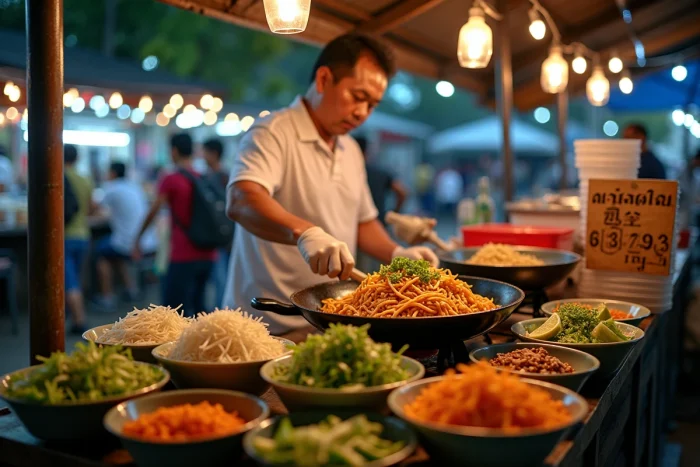
Tasting a country’s favorite dishes often involves street food. Stalls in Bangkok, carritos in Mexico, or warungs in Bali offer specialties at accessible prices, in a visible preparation setting. Since the pandemic, several major tourist cities have tightened regulations governing this street food.
In Bangkok and Hanoi, health inspections on stalls have intensified: mandatory licenses, limitations on group sizes for organized food tours, regulated selling hours. These measures concretely alter how a traveler can access local specialties accompanied by a guide.
For the independent traveler, some reliable indicators remain:
- A stall with a rapid turnover of local customers generally ensures the freshness of products and cooking to order.
- Covered markets (like Mercado de San Juan in Mexico or Tsukiji Outer Market in Tokyo) provide a more structured setting, with stalls subject to regular inspections.
- Destinations that have formalized official culinary tours (Peru, South Korea, Thailand) offer food tours led by certified guides, simplifying access to lesser-known regional specialties.
Culinary travel remains the most direct gateway into a country’s culture. Rankings evolve, travelers’ eating habits diversify, and local regulations transform the on-the-ground experience. A favorite dish is never fixed: it reflects a specific moment in a country’s history and the curiosity of those who taste it.