Post-Colonoscopy Diet: Tips for a Smooth Recovery and Avoiding Mistakes
The colonoscopy is over, the gastroenterologist has given their initial instructions, and the question quickly arises: what can one eat without risking worsening digestive discomfort or causing a complication? The answer largely depends on what happened during the examination, particularly whether or not a polypectomy was performed. The digestive tract, distended by the insufflation of air or CO2, needs a resting period, the duration of which varies depending on the procedure performed.
Polypectomy and diet after colonoscopy: a stricter regimen than expected
When the examination was limited to observation without any procedure, the colonic mucosa did not suffer any injury: normal eating can resume the next day.
In contrast, when polyps have been removed (polypectomy or mucosectomy), the wall of the colon has an internal wound. According to the French Society of Digestive Endoscopy, the risk of delayed bleeding can occur several days after the examination. This delay justifies a soft and low-residue diet for a longer period, usually several days.
Knowing what to eat and avoid after a colonoscopy takes on a very concrete meaning: irritating foods (spices, strong spices, alcohol, very fatty foods) should be avoided to limit any irritation to the resection area.
What the size of the polyp changes
The larger the removed polyp, the larger the residual wound. The dietary instructions given by the medical team therefore vary depending on the procedure. A small polyp removed with forceps does not create the same healing surface as an extensive mucosectomy. Asking the gastroenterologist for details about the procedure performed allows for adjusting the duration of the low-residue diet.
Resuming anticoagulants and diet: an often-overlooked angle
Patients on aspirin, oral anticoagulants, or non-steroidal anti-inflammatory drugs (NSAIDs) face a double constraint after a colonoscopy with polypectomy. These treatments increase the risk of gastrointestinal bleeding, and their resumption must be coordinated with refeeding.
Some teams recommend delaying the resumption of these medications by one to two days, while maintaining a soft diet. Specifically, resuming blood-thinning treatment at the same time as a meal rich in hard fibers or cooked fats can stress an already fragile colon.
This interaction between anticoagulants and refeeding concerns a significant portion of patients over 50, the age group where screening colonoscopy is most common. The prescribing physician of the anticoagulant treatment and the gastroenterologist must coordinate, and the patient should explicitly ask the question before leaving the facility.
Effects of sedation on post-colonoscopy food tolerance
The type of anesthesia used during the colonoscopy directly affects how the patient tolerates their first meals. Propofol sedation, common in France, causes less residual nausea than classic general anesthesia, but the state of drowsiness can last several hours.
Eating too quickly after sedation poses a risk of nausea or vomiting. The basic recommendation is to wait until the swallowing reflexes have fully returned before drinking or eating. A sip of water serves as the first test. If it goes down without discomfort, a light meal can follow.
Light sedation or general anesthesia: two different situations
With light sedation (midazolam for example), resuming food is often possible within an hour after the examination. After general anesthesia, the delay extends, and the first tolerated foods are limited to smooth textures: applesauce, broth, plain yogurt. Available data do not allow for a universal timeframe, as tolerance varies among patients and protocols at each center.
Foods to prioritize and common mistakes in the first days
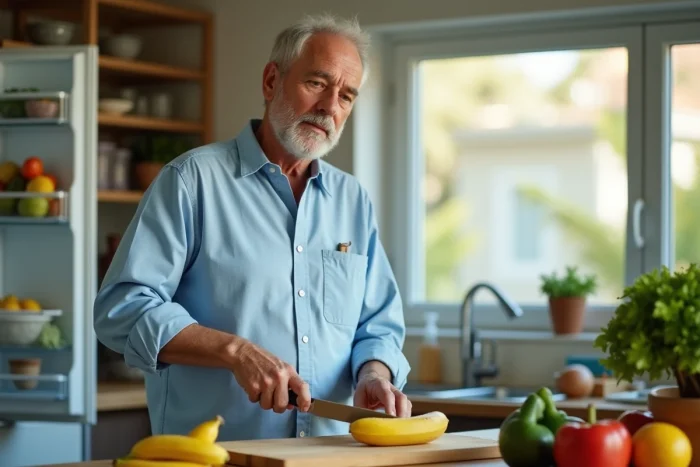
The logic of resuming food after a colonoscopy is based on a simple principle: gradually reintroduce fibers over several days rather than abruptly returning to the usual diet. The colon has been emptied by the bowel preparation and then distended during the examination. It needs time to regain normal transit.
Well-tolerated foods in the first hours:
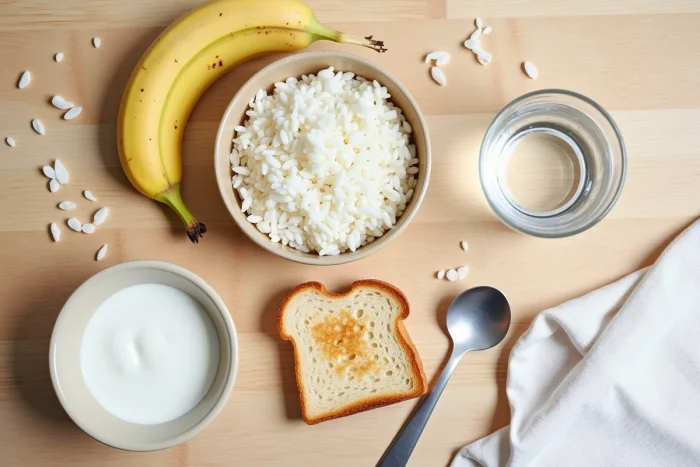
- White rice, well-cooked pasta, soft bread: low-fiber starches that do not irritate the mucosa
- Steamed fish or poultry, without fatty sauce: easily digestible protein
- Applesauce, ripe banana, filtered vegetable broth: foods that provide nutrients without irritating residue
The most common mistakes relate to timing. Reintroducing raw vegetables, legumes, or whole grains on the first day often leads to bloating and abdominal pain related to fermentation. Waiting two to three days before these high-fiber foods significantly reduces discomfort.
Alcohol after colonoscopy: a false debate
Some patients believe that a glass of wine on the night of the examination is not a problem. Alcohol irritates the digestive mucosa and promotes dehydration, two effects contrary to what the colon needs for healing. After a polypectomy, alcohol increases the risk of bleeding at the resection site. Avoiding it for several days remains the simplest and best-documented precaution.
Resuming food after a colonoscopy is not just about a list of allowed or forbidden foods. It depends on the procedure performed during the examination, the type of sedation, ongoing treatments, and individual tolerance. Keeping the examination report handy and asking the gastroenterologist about the precise duration of the adapted diet remains the most useful reflex.